Union Investment
Union Investment
Union Investment
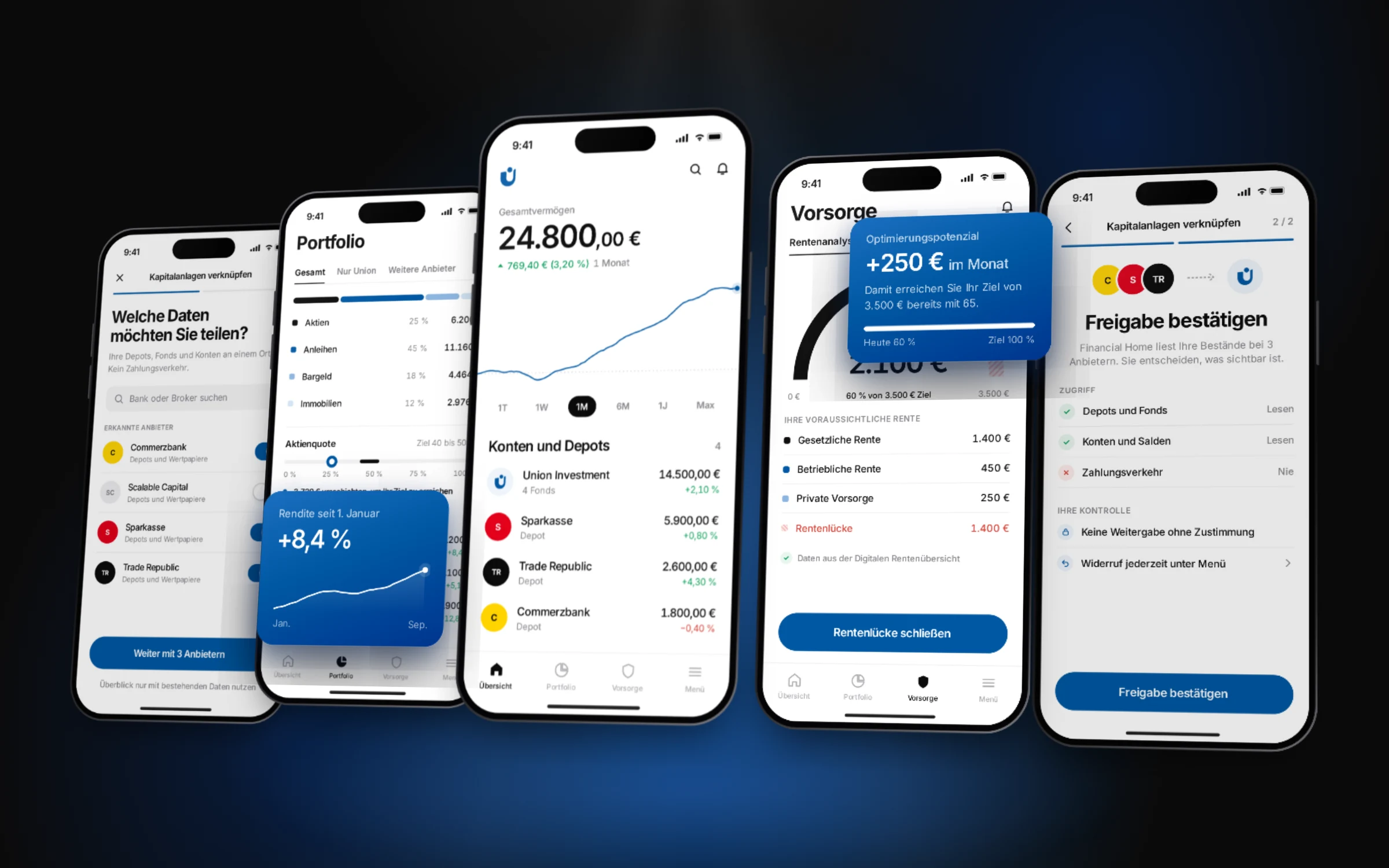
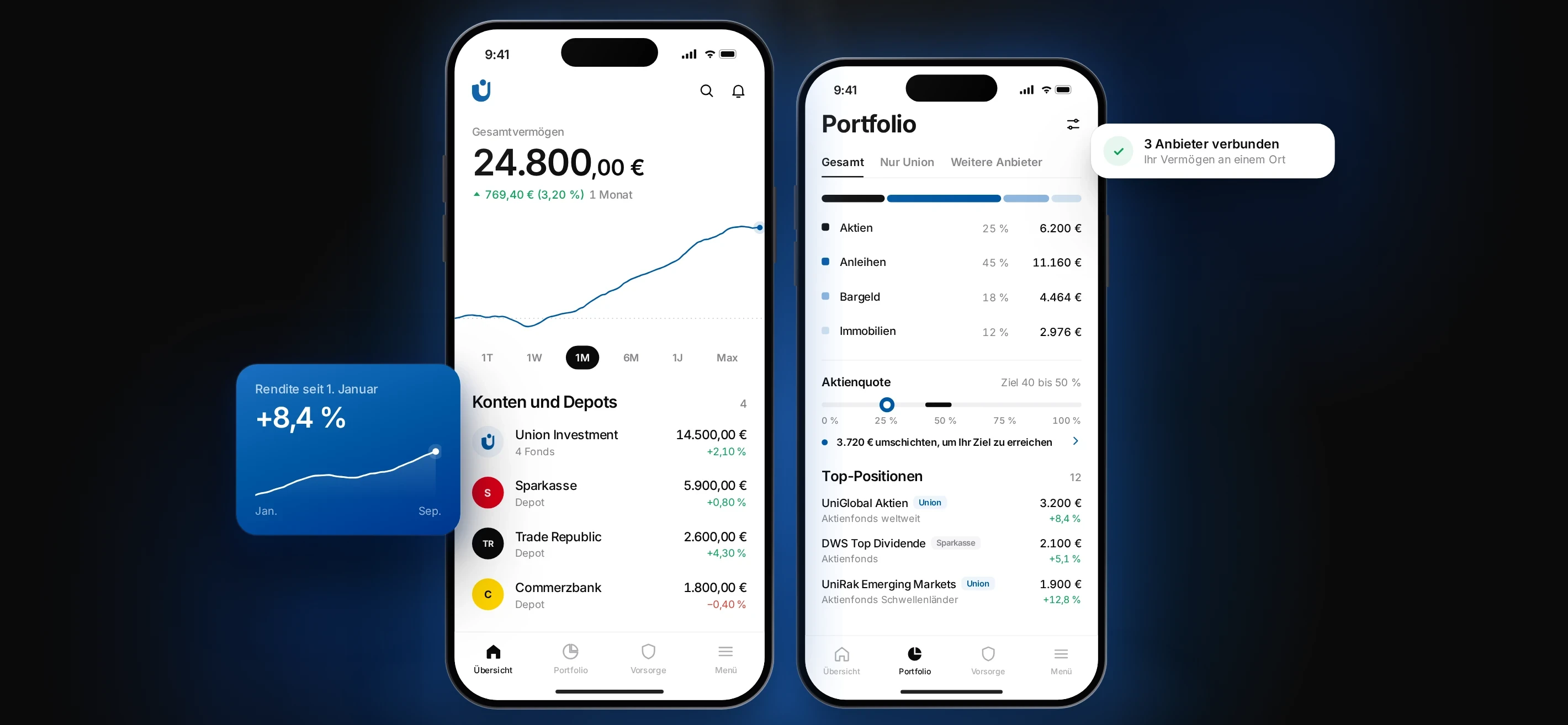
Union Investment is one of Germany’s largest asset managers. Its Financial Home shows a member’s Union Investment holdings next to brokerage accounts, funds and bank accounts at other providers such as Commerzbank, Sparkasse and Trade Republic. With the member’s consent, that combined view powers portfolio analysis, retirement planning and recommendations.
Union Investment is one of Germany’s largest asset managers. Its Financial Home shows a member’s Union Investment holdings next to brokerage accounts, funds and bank accounts at other providers such as Commerzbank, Sparkasse and Trade Republic. With the member’s consent, that combined view powers portfolio analysis, retirement planning and recommendations.
Union Investment is one of Germany’s largest asset managers. Its Financial Home shows a member’s Union Investment holdings next to brokerage accounts, funds and bank accounts at other providers such as Commerzbank, Sparkasse and Trade Republic. With the member’s consent, that combined view powers portfolio analysis, retirement planning and recommendations.
Year
2025
Client
Union Investment
Category
Fintech
Duration
Since October 2025
Objective
Objective
A member who sees only their Union Investment balance sees only part of their money. The goal: an up-to-date view of everything they own, at Union Investment and elsewhere, with advice built on it, from rebalancing to retirement planning. Union Investment becomes the place where members see their whole portfolio.
Role
Role
Pommer Design leads UX: research, user flows, information architecture, interactive prototypes and visual design in Union Investment’s design language. The work covers the whole journey: the single-provider view, linking other providers, managing consent, portfolio analysis and retirement planning.
Approach
Approach
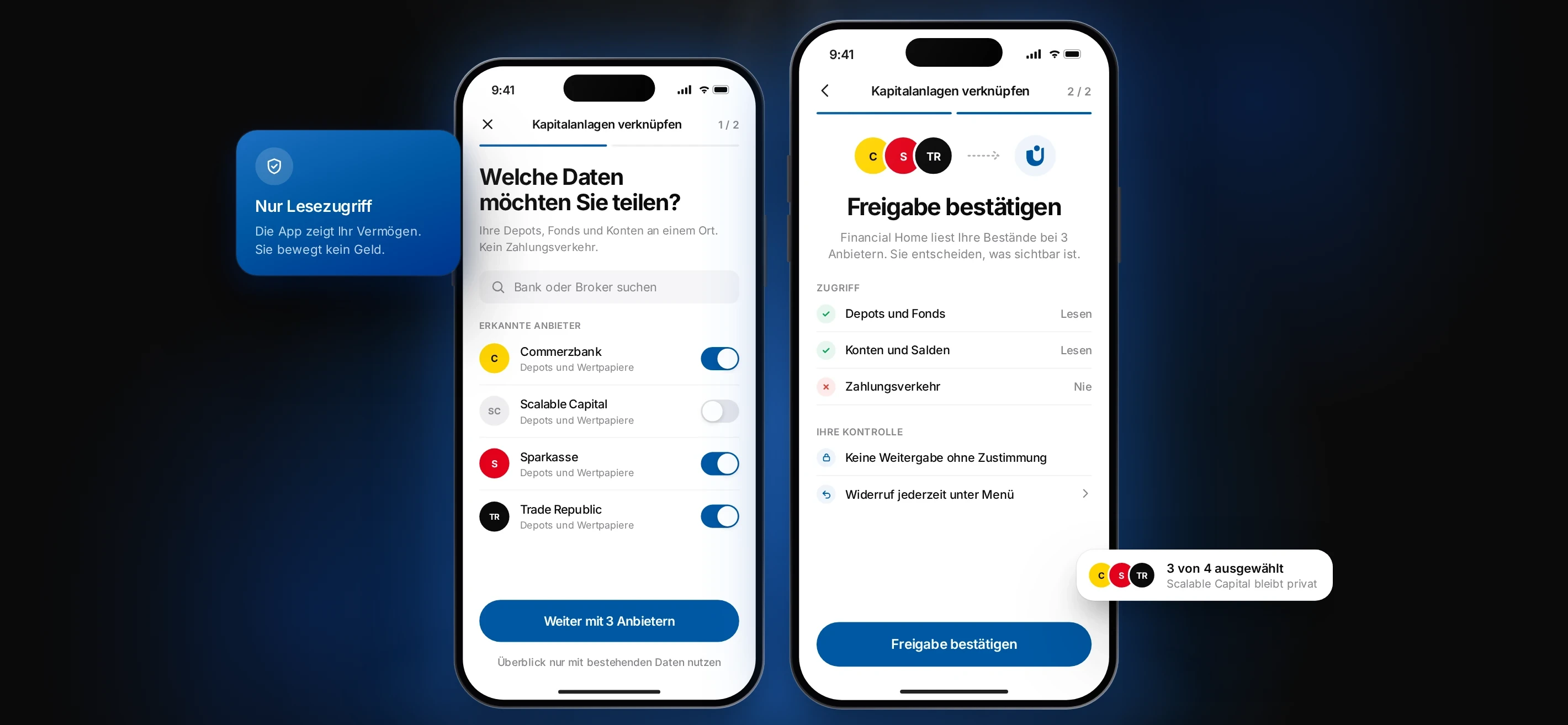
The hard part is trust. Linking an outside brokerage account means sharing sensitive financial data. That’s why consent sits in the main flow. Each provider gets its own toggle, a plain statement says no payments can be made, and members can withdraw consent at any time. The interface works the same way for one account or many.
Outcome
Outcome
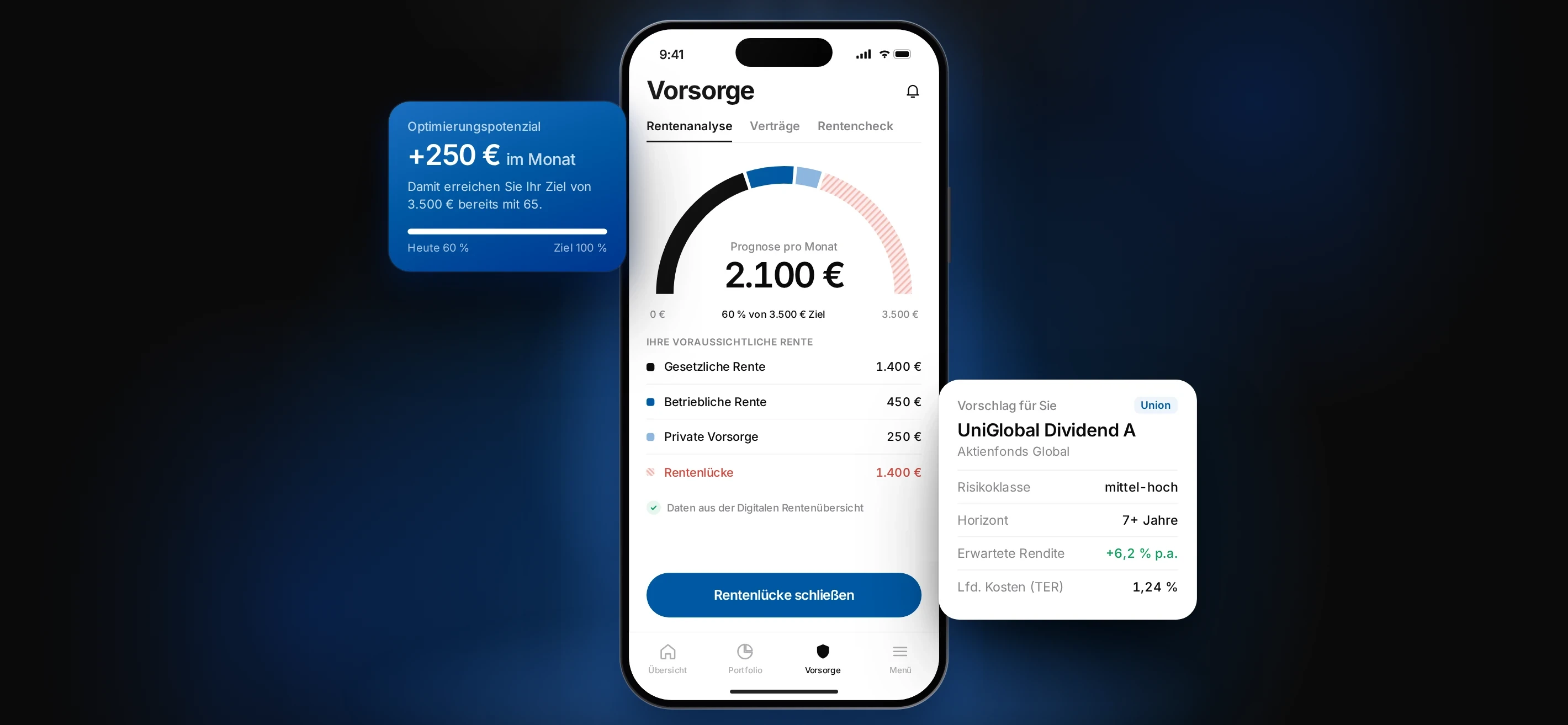
Connecting outside providers turns a single balance into a complete financial picture: total wealth, allocation across providers and year-to-date performance in one view. From there, the platform points out concrete improvements: rebalancing toward target equity ranges and fund recommendations. Retirement planning shows members exactly what it takes to reach their goals. Union Investment goes from product provider to financial home, the first place members go to see and manage their money.
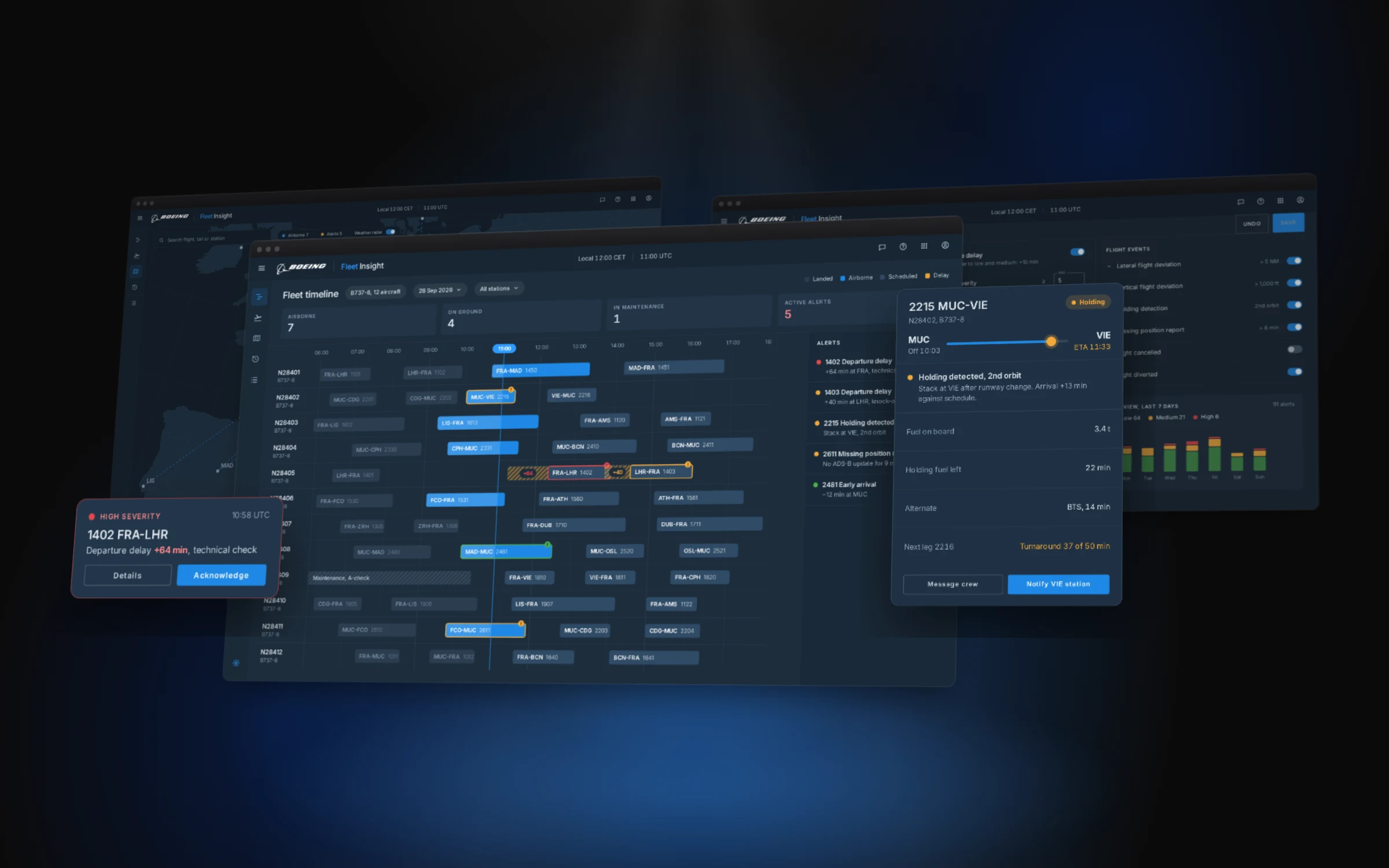
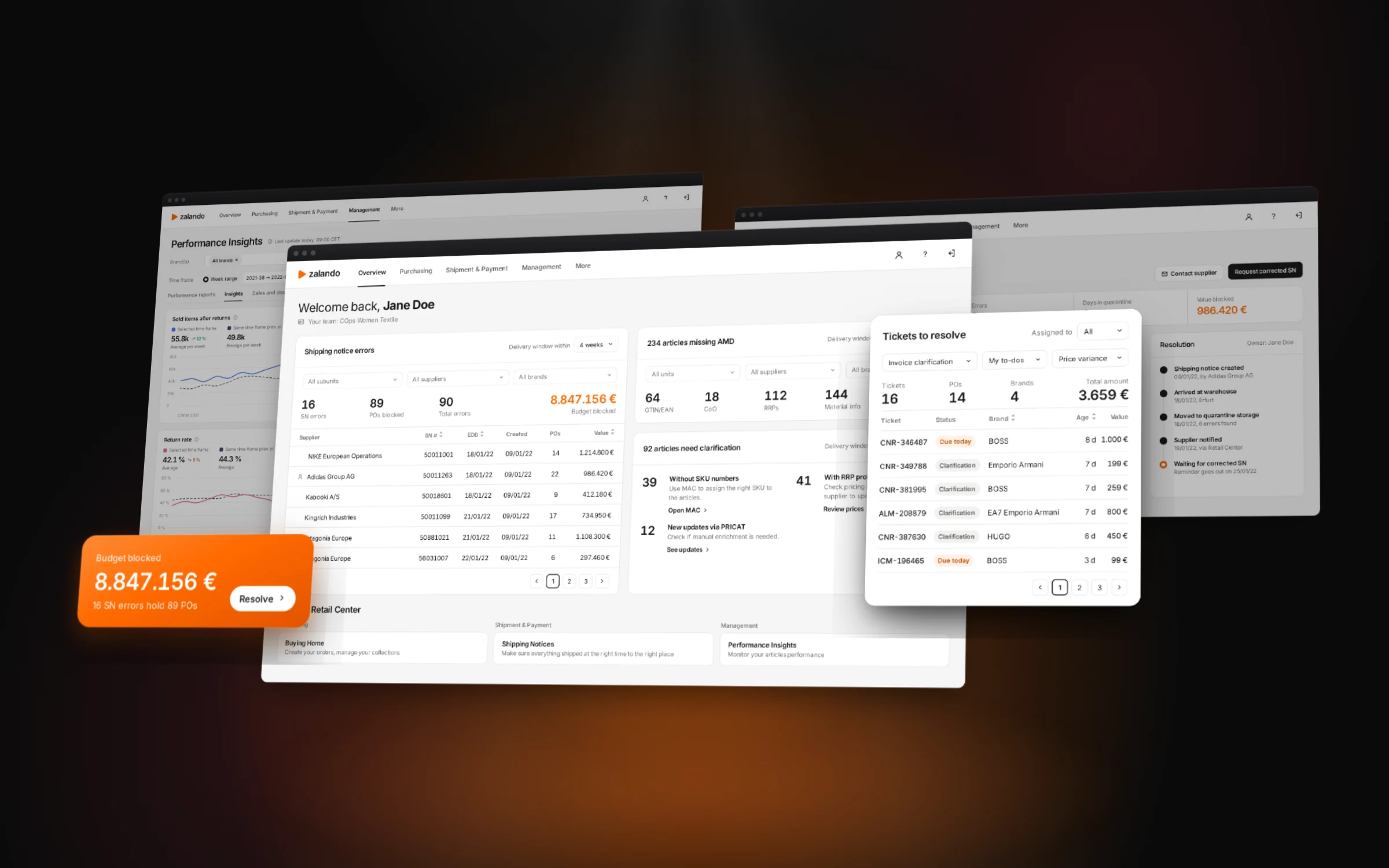
Illustrative views. Client work is confidential. We show the real work under NDA, on request.
More work More work
03
//FAQ
Questions
ANSWERS
01
How does a project start?
With a short discovery phase. We agree on goals, constraints and success criteria and put them in writing first.
02
What kinds of organizations do you work with?
Organizations that run on information: banks and insurers, airlines and rail operators, energy, pharma and software companies. Size matters less than the ambition for the product. The common thread is complexity: dense data, several product teams, or expert users with no time to spare. Early-stage companies with a hard problem are welcome too.
03
How do you approach complex digital platforms?
We map the work before we design for it: who decides what, under which business rules, and how the systems depend on each other. That map becomes the frame for every feature and team that follows.
04
How do you keep a large product portfolio consistent?
With a design system that engineering owns as much as design does: shared components, documented decisions and a review process for changes. New teams start from it instead of from scratch, and the portfolio still feels like one product as it grows.
05
How do you measure success?
We test the new product against the old one on the same tasks and compare time, errors and ratings. A project succeeds when the new version wins on all three. After release we measure again, and the work counts as done when the numbers hold in daily use.
06
Who will work on our project?
Programs of six to twelve months run with a core team led by Moritz Pommer, the founder. Specialists in research, interface design and engineering join larger programs.
07
Can we see the real work?
Yes. The views on this site are illustrative, because client work is confidential. In a call under NDA, we walk you through the real projects.
08
Do you work in German?
Yes. Interviews, workshops and documents run in German or English, whichever your teams work in.
09
Which accessibility standard do you design to?
WCAG 2.2 AA, by default. We design and test against it, so accessibility is part of the specs engineering builds from.
03
//FAQ
Questions
ANSWERS
01
How does a project start?
With a short discovery phase. We agree on goals, constraints and success criteria and put them in writing first.
02
What kinds of organizations do you work with?
Organizations that run on information: banks and insurers, airlines and rail operators, energy, pharma and software companies. Size matters less than the ambition for the product. The common thread is complexity: dense data, several product teams, or expert users with no time to spare. Early-stage companies with a hard problem are welcome too.
03
How do you approach complex digital platforms?
We map the work before we design for it: who decides what, under which business rules, and how the systems depend on each other. That map becomes the frame for every feature and team that follows.
04
How do you keep a large product portfolio consistent?
With a design system that engineering owns as much as design does: shared components, documented decisions and a review process for changes. New teams start from it instead of from scratch, and the portfolio still feels like one product as it grows.
05
How do you measure success?
We test the new product against the old one on the same tasks and compare time, errors and ratings. A project succeeds when the new version wins on all three. After release we measure again, and the work counts as done when the numbers hold in daily use.
06
Who will work on our project?
Programs of six to twelve months run with a core team led by Moritz Pommer, the founder. Specialists in research, interface design and engineering join larger programs.
07
Can we see the real work?
Yes. The views on this site are illustrative, because client work is confidential. In a call under NDA, we walk you through the real projects.
08
Do you work in German?
Yes. Interviews, workshops and documents run in German or English, whichever your teams work in.
09
Which accessibility standard do you design to?
WCAG 2.2 AA, by default. We design and test against it, so accessibility is part of the specs engineering builds from.
//FAQ
Questions
ANSWERS
How does a project start?
With a short discovery phase. We agree on goals, constraints and success criteria and put them in writing first.
What kinds of organizations do you work with?
Organizations that run on information: banks and insurers, airlines and rail operators, energy, pharma and software companies. Size matters less than the ambition for the product. The common thread is complexity: dense data, several product teams, or expert users with no time to spare. Early-stage companies with a hard problem are welcome too.
How do you approach complex digital platforms?
We map the work before we design for it: who decides what, under which business rules, and how the systems depend on each other. That map becomes the frame for every feature and team that follows.
How do you keep a large product portfolio consistent?
With a design system that engineering owns as much as design does: shared components, documented decisions and a review process for changes. New teams start from it instead of from scratch, and the portfolio still feels like one product as it grows.
How do you measure success?
We test the new product against the old one on the same tasks and compare time, errors and ratings. A project succeeds when the new version wins on all three. After release we measure again, and the work counts as done when the numbers hold in daily use.
Who will work on our project?
Programs of six to twelve months run with a core team led by Moritz Pommer, the founder. Specialists in research, interface design and engineering join larger programs.
Can we see the real work?
Yes. The views on this site are illustrative, because client work is confidential. In a call under NDA, we walk you through the real projects.
Do you work in German?
Yes. Interviews, workshops and documents run in German or English, whichever your teams work in.
Which accessibility standard do you design to?
WCAG 2.2 AA, by default. We design and test against it, so accessibility is part of the specs engineering builds from.
03
//FAQ
Questions
ANSWERS
01
How does a project start?
With a short discovery phase. We agree on goals, constraints and success criteria and put them in writing first.
02
What kinds of organizations do you work with?
Organizations that run on information: banks and insurers, airlines and rail operators, energy, pharma and software companies. Size matters less than the ambition for the product. The common thread is complexity: dense data, several product teams, or expert users with no time to spare. Early-stage companies with a hard problem are welcome too.
03
How do you approach complex digital platforms?
We map the work before we design for it: who decides what, under which business rules, and how the systems depend on each other. That map becomes the frame for every feature and team that follows.
04
How do you keep a large product portfolio consistent?
With a design system that engineering owns as much as design does: shared components, documented decisions and a review process for changes. New teams start from it instead of from scratch, and the portfolio still feels like one product as it grows.
05
How do you measure success?
We test the new product against the old one on the same tasks and compare time, errors and ratings. A project succeeds when the new version wins on all three. After release we measure again, and the work counts as done when the numbers hold in daily use.
06
Who will work on our project?
Programs of six to twelve months run with a core team led by Moritz Pommer, the founder. Specialists in research, interface design and engineering join larger programs.
07
Can we see the real work?
Yes. The views on this site are illustrative, because client work is confidential. In a call under NDA, we walk you through the real projects.
08
Do you work in German?
Yes. Interviews, workshops and documents run in German or English, whichever your teams work in.
09
Which accessibility standard do you design to?
WCAG 2.2 AA, by default. We design and test against it, so accessibility is part of the specs engineering builds from.
Project inquiries
Frankfurt and London. Operating worldwide

Interaction design for mission-critical software
Product and interaction design for enterprise platforms and apps. Tell us about your project.